
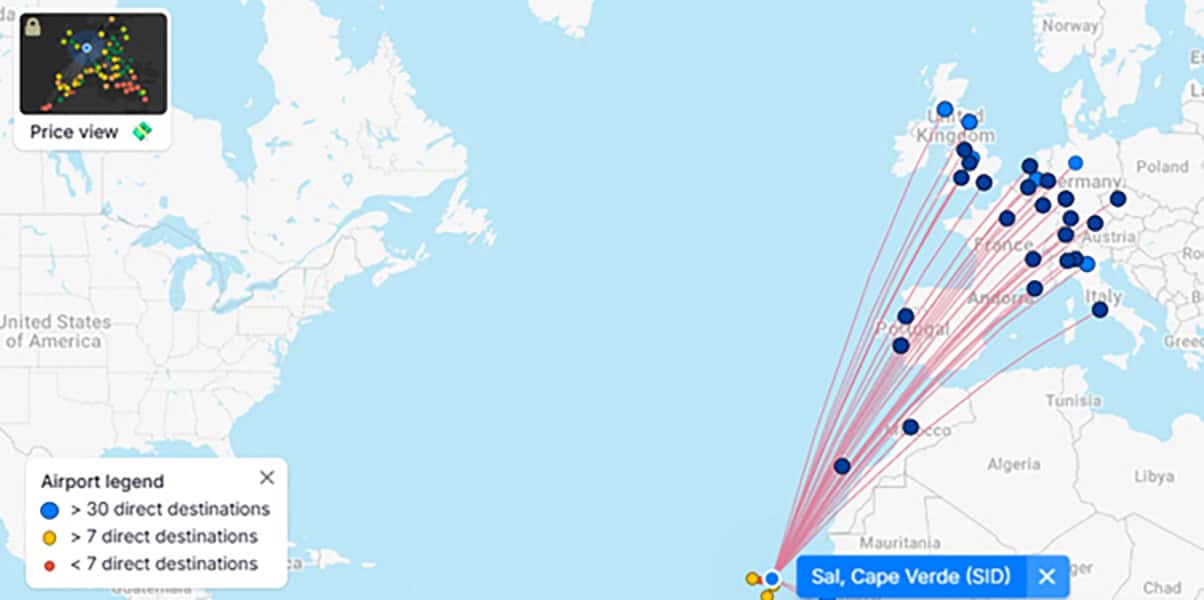
1. How long does it take to get there? 5.5-6 hours from most of Europe and the UK, with direct flights from 37 cities. 4 hours from Portugal.
2. Do I need vaccinations? None are obligatory for Cabo Verde. Check with you doctor which are recommended.
3. Are there any venomous species? No. There are no endemic poisonous snakes, beetles or spiders on the islands.
4. Do I need malaria tablets? No. Malaria is not prevalent in Cabo Verde, though there are cases of dengue occasionally. It is advisable to bring good insect repellent with a high concentration of DEET to avoid the annoyance of bites.


5. How safe is Cabo Verde? It is rated one of the safest tourist destinations in the world. Petty theft is a minor issue, as it is everywhere, so it is wise to take the usual precautions ie keep your phone and bag close to you, cover up hotel wristbands and leave expensive jewellery at home.
6. Do I need a visa? People from the UK and Europe do not require a visa if entering the country for less than 30 days, but you do need to fill out a Pre-Registration Form ease.gov.cv and pay Airport Tax, see below
If you wish to stay for more than 30 days, apply online here portalconsular.mnec.gov.cv/en/vistos
For more information on visas and Digital Nomad visas, CLICK HERE
What is the airport tax? If you are travelling on a package holiday with a company like TUI, they will probably complete your Pre-Registration Form on your behalf. If you are an independent traveller however, you can either pay online the 34 Euros when you complete the Pre-Registration Form here and pass through the electronic passport gates. If you prefer, you can pay on arrival using cash (Euros or Escudos) or card. Keep right of the e-gates and ask the guard to let you approach the immigration offices. “Eu devo pagar” – “I need to pay” will get you through.
7. What language do they speak? Portuguese, English and French are widely spoken by Cabo Verdeans. Many tour guides and taxi drivers will speak many more languages. The locals also have their own Creole language, called Kriolu. It’s worth learning a few words.

8. What currencies are accepted? Euros and Escudos (CVE) are widely accepted, as are credit cards. The CVE is fixed to the Euro at a rate of 110.270 Escudos to the Euro. Most hotels, restaurants and bars accept debit and credit cards though its wise to carry some cash for taxis and tips. You can use ATMs to withdraw CVE, but not Euros. NB you cannot change Escudos outside of Cabo Verde. It is a closed currency.
9. What is the tipping culture? Tips are very welcome. Bear in mind a bar person or waiting staff may be earning just 1-2 Euros an hour, so they live for and on their tips. The average wage is around 250 Euros a month across the islands, though higher in Sal as it’s the main tourist island.
10. What’s the best time of year to visit? Cabo Verde is a year-round holiday destination, as the temperature ranges from 23 to 30 degrees all year round during the day, and rarely drop below 18 degrees at night. The average is around 27 degrees daytime, 21 at night. Luckily there’s a very refreshing breeze coming from the North East almost all year. Be careful: the wind can make it feel deceptively cool, and people get sunburn unwittingly. At night during the cooler months (Jan-March) you may need a light jacket, fleece or cardigan.
Some people find the summer months, particularly August and September, too hot as there is less of a breeze. It can be cloudy, and you may get one or two rain showers (these are celebrated, as the drier islands get so little rainfall!) Over the country, there is an average of just 145mm of rain for the year. Compare that with Belgium: 820mm a year. Scotland: over 1,000mm a year. Usually there 7-10 hours of sunshine a day. For a month by month guide, click here .
Have you got questions about buying property? Then click here!
Join The Discussion