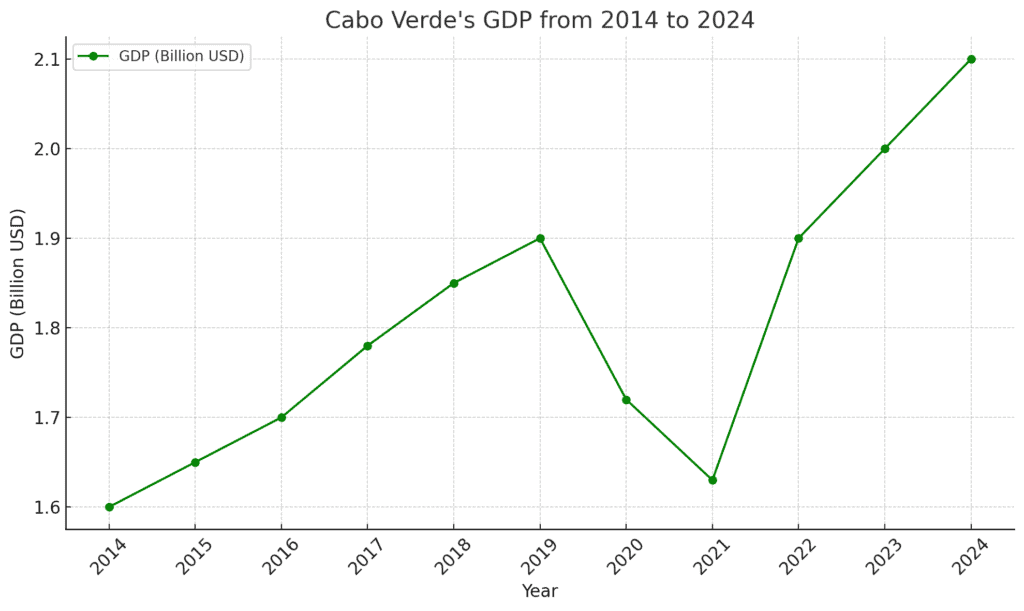
Cabo Verde’s economy has demonstrated resilience and growth from 2022 onwards, driven primarily by a robust tourism sector and effective fiscal policies.
Economic Growth
In 2022, Cabo Verde’s economy experienced a significant rebound with a real GDP growth of 17.7%, following the downturn caused by the COVID-19 pandemic. This surge was largely attributed to the revival of tourism, bolstered by one of the highest vaccination rates in Africa. (IMF) However, in 2023, the growth rate moderated to 5.1%, supported by a record-high 1 million tourist arrivals that bolstered activity in the services sector. (World Bank Group)
Fiscal Performance
The government’s commitment to fiscal consolidation yielded positive results. Tax revenue increased from 18.1% of GDP in 2022 to 18.9% in 2023, aided by reforms such as the implementation of electronic invoicing. Consequently, the fiscal deficit narrowed from 4.6% of GDP in 2022 to 4.4% in 2023. (African Development Bank Group) Notably, Cabo Verde recorded a 20-year high primary surplus of 2% in 2023, with the overall deficit shrinking to 0.3% from 3.9% in 2022. (The World Bank Docs)
Public Debt
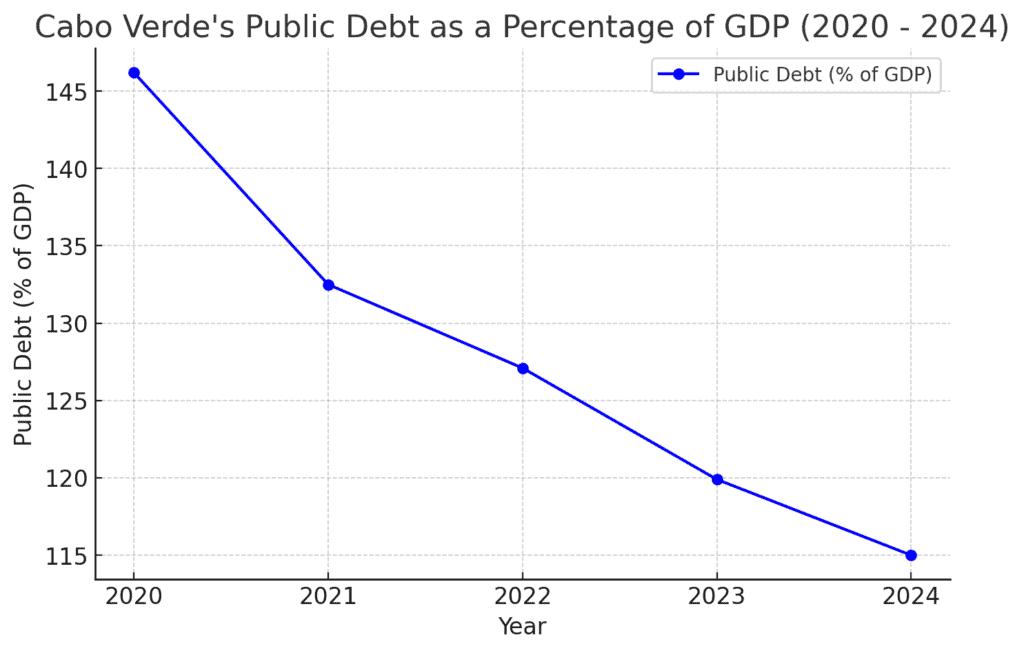
Public debt as a percentage of GDP declined from 127.1% in 2022 to 119.9% in 2023, attributed to higher nominal GDP growth and fiscal overperformance. (African Development Bank Group) This downward trend reflects the government’s effective debt management strategies.
External Sector
The current account deficit widened slightly from 5.8% of GDP in 2022 to 6.1% in 2023, driven by high import bills and lower exports. However, international reserves increased from €626 million in 2022 to €728 million in 2023, providing approximately 6.7 months of import cover. (African Development Bank Group)
Inflation
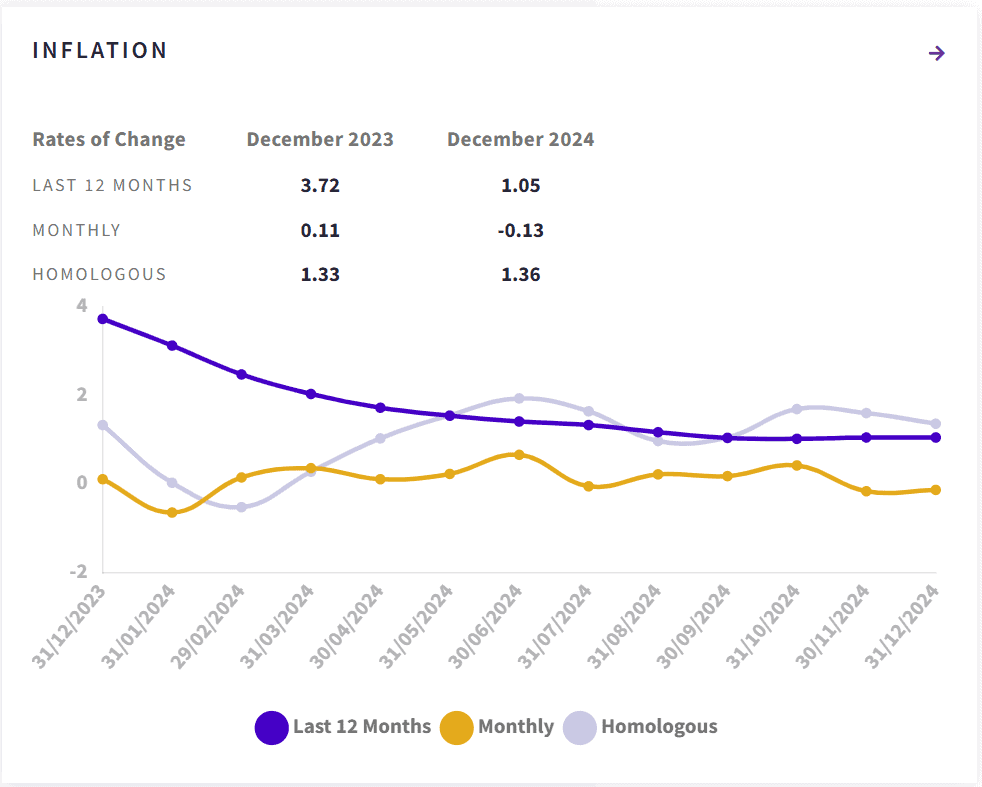
Inflationary pressures eased, with the average inflation rate decreasing from 7.9% in 2022 to 3.7% in 2023. (Coface)
Unemployment and Poverty
The unemployment rate fell to 10.3% in 2023, dropping below pre-pandemic levels. Additionally, poverty rates decreased, with a 0.5 percentage point reduction, bringing the poverty rate down to 15% in 2023. (World Bank Group)
Outlook
The medium-term outlook for Cabo Verde remains positive, with continued support expected from international partners such as the International Monetary Fund (IMF). The economy is projected to maintain steady growth, supported by ongoing reforms and a resilient tourism sector. (The Economist Intelligence Unit)
In summary, from 2022 onwards, Cabo Verde has showcased economic resilience, marked by robust growth, fiscal prudence, and social improvements. The nation’s strategic focus on tourism and sound economic policies have been pivotal in its recovery and ongoing development.